Table of Contents
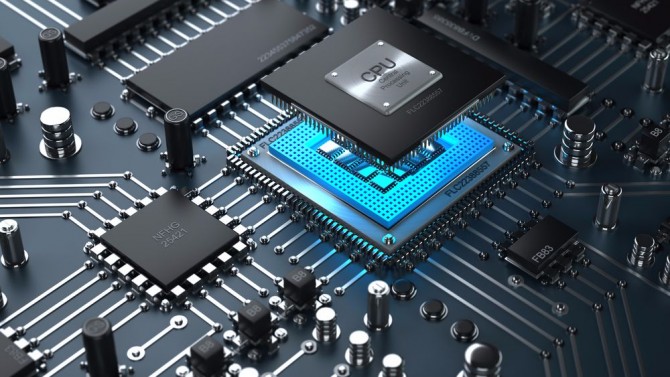
The question of what is a microprocessor leads to the foundation of modern computing—a compact, intricate chip that governs virtually every electronic device in existence. It serves as the “brain” of a computer system, interpreting instructions, performing calculations, and managing communication between hardware components. Since its inception in the 1970s, this silicon marvel has evolved from a simple processor capable of basic arithmetic to a complex, multi-core unit driving artificial intelligence, robotics, and advanced computing systems worldwide.
The Birth of a Revolution in Computing
Before the arrival of the integrated central processing unit, computers were sprawling machines built from separate components. The introduction of the first microprocessor condensed what once filled entire rooms into a single chip. This invention marked a paradigm shift, democratizing computing power and enabling the creation of personal computers, mobile phones, and embedded systems. The early 4004 chip by Intel transformed the landscape, setting the stage for an age of rapid digital progress.
Each transistor on the silicon die operates as a microscopic switch, channeling electrical signals that form the basis of logic operations. Millions—and later billions—of these transistors work in unison, translating binary code into action. The exponential increase in transistor density, famously observed in Moore’s Law, propelled the performance of processors at an unprecedented rate, shrinking devices while amplifying their power.
Anatomy of a Microprocessor
A processor’s internal structure is a symphony of precision. It typically contains several key sections that collaborate to perform tasks efficiently. The Arithmetic Logic Unit (ALU) executes arithmetic and logical operations, the Control Unit (CU) orchestrates data flow, and various registers hold temporary data. Together, these components create a harmonious cycle of fetching, decoding, and executing instructions.
The cache memory within the processor stores frequently accessed data, minimizing latency and accelerating performance. Pipelines, meanwhile, divide instructions into smaller stages, enabling multiple processes to occur simultaneously. This approach revolutionized computational speed, turning serial operations into parallel marvels of efficiency.
Instruction Sets and Processing Cycles
Every computing task begins as a set of instructions—encoded commands telling the processor what to do. These instructions belong to specific architectures, such as CISC (Complex Instruction Set Computing) or RISC (Reduced Instruction Set Computing). CISC processors favor versatility with a vast array of commands, while RISC simplifies operations for faster execution.
The heart of computation beats through the instruction cycle: fetch, decode, execute, and store. During this process, data moves through intricate pathways of logic gates and registers, completing millions of operations per second. The clock speed, measured in gigahertz, synchronizes these actions, dictating how many instruction cycles occur each second.
The Role of Transistors and Semiconductor Technology
At the core of the microprocessor lies the transistor—a device so minuscule that billions can fit within a fingernail-sized chip. Made from semiconductor materials such as silicon, these transistors act as on-off switches, controlling the flow of electricity in binary patterns of 0s and 1s.
Advancements in semiconductor fabrication have been breathtaking. From the early micrometer scales to today’s nanometer precision, engineers have continuously refined photolithography and doping techniques to etch increasingly smaller circuits. The transition to FinFET and gate-all-around (GAA) designs ensures reduced power leakage and higher efficiency, enabling continued performance growth even as physical limits approach.
Evolution from Single-Core to Multi-Core Architectures
The single-core processors of early computing could handle only one task at a time, leading to performance bottlenecks. The solution emerged in the form of multi-core architectures—chips housing multiple processing units that can perform tasks concurrently. Dual-core, quad-core, and octa-core configurations became standard, unlocking parallel processing capabilities.
Each core operates semi-independently, executing threads that can communicate through shared memory. This innovation significantly increased computational throughput, especially for tasks like rendering, simulations, and artificial intelligence processing. Hyper-threading and simultaneous multithreading further amplified efficiency, allowing each core to handle multiple instruction streams simultaneously.
Integration of Memory and Advanced Components
Modern processors are no longer isolated entities. They integrate additional components such as graphics processing units (GPUs), memory controllers, and even neural processing units (NPUs) directly onto the chip. This integration reduces latency, boosts performance, and minimizes power consumption.
The rise of system-on-chip (SoC) architecture embodies this trend. Found in smartphones, tablets, and embedded systems, SoCs combine CPU cores, GPUs, input/output controllers, and connectivity modules within one compact die. This design streamlines operations, paving the way for energy-efficient yet powerful portable devices.
The Importance of Clock Speed and Overclocking
Clock speed serves as a fundamental performance indicator. It measures how quickly a processor can complete instruction cycles, with higher frequencies often translating into faster computing. However, frequency alone does not guarantee performance; architectural efficiency plays an equally significant role.
Enthusiasts often engage in overclocking—manually increasing clock speed beyond factory settings—to extract additional performance. While this can yield remarkable results, it introduces thermal challenges and demands robust cooling solutions. Manufacturers counter this with dynamic frequency scaling, allowing processors to automatically adjust speed according to workload and temperature.
The Relationship Between Power and Heat
Performance gains come at the cost of energy consumption and heat generation. Each transistor switching event produces thermal energy, which, if unmanaged, degrades efficiency and hardware integrity. Thermal design power (TDP) represents the maximum heat output a processor is expected to handle under typical workloads.
To combat overheating, engineers employ heat sinks, fans, vapor chambers, and liquid cooling systems. At the micro level, innovations such as dynamic voltage scaling and power gating minimize unnecessary energy usage. Balancing performance with thermal efficiency remains a central challenge in processor design.
Embedded Systems and Everyday Applications
Microprocessors are not confined to desktop or laptop computers; they permeate every facet of modern life. Embedded systems in household appliances, medical equipment, automotive control units, and industrial robots all rely on compact processing units to perform specialized tasks.
In these environments, processors are optimized for reliability and low power consumption rather than raw speed. Real-time processors, for example, must respond to external inputs within strict time constraints, ensuring precision in applications such as braking systems or aerospace navigation. The ubiquity of embedded processors underscores their silent dominance in the technological ecosystem.
Specialized Processors and Parallel Computing
The rise of domain-specific processors reflects the growing demand for tailored computing solutions. Graphics processors accelerate image rendering, tensor cores enhance machine learning computations, and digital signal processors (DSPs) handle complex audio and communication tasks.
Parallel computing leverages these specialized processors to divide large computational problems into smaller segments processed simultaneously. The synergy between CPUs, GPUs, and co-processors forms the backbone of modern supercomputing, enabling breakthroughs in scientific research, weather forecasting, and molecular modeling.
Architectural Innovations and Instruction-Level Parallelism
Instruction-level parallelism (ILP) allows processors to execute multiple instructions concurrently, maximizing efficiency. Techniques such as pipelining, superscalar execution, and out-of-order processing make this possible. By overlapping instruction phases, the processor ensures no idle cycles occur between operations.
Branch prediction further enhances speed by anticipating the path of future instructions. If correct, it maintains seamless execution; if incorrect, it triggers pipeline flushing—a temporary setback quickly compensated by modern predictive algorithms. These microarchitectural enhancements collectively elevate performance without demanding additional clock speed.
Fabrication Processes and the Nanometer Race
The journey of miniaturization defines the semiconductor industry’s relentless innovation. Each new generation of processors is identified by its fabrication node—measured in nanometers. Smaller nodes mean shorter distances for electrons to travel, resulting in faster and more efficient chips.
From the 65nm era to today’s 3nm designs, manufacturers like TSMC, Intel, and Samsung continually push the boundaries of what’s physically possible. Extreme ultraviolet lithography (EUV) represents the cutting edge of this evolution, using shorter wavelengths to etch finer details with unparalleled precision.
Quantum and Neuromorphic Processing Horizons
The limitations of classical transistor-based computing are inspiring bold new frontiers. Quantum processors harness qubits—quantum bits capable of representing multiple states simultaneously—to perform computations impossible for traditional architectures. Though still experimental, quantum systems promise exponential acceleration in fields like cryptography and optimization.
Neuromorphic processors, on the other hand, mimic the human brain’s neural architecture. They process information through interconnected nodes, enabling adaptive learning and energy efficiency. These emerging technologies may redefine computation itself, shifting from rigid logic to probabilistic reasoning and biological emulation.
The Role of Firmware and Software Optimization
Hardware alone cannot realize its full potential without finely tuned software. Firmware acts as the intermediary between physical components and operating systems, ensuring smooth communication. Compilers translate high-level code into optimized machine instructions tailored to specific architectures.
Software developers play a crucial role in exploiting processor capabilities. Techniques such as vectorization, parallelization, and memory optimization allow programs to take advantage of modern multi-core and SIMD (Single Instruction, Multiple Data) features. The harmony between hardware and software forms the true essence of computational efficiency.
Security and Processor Vulnerabilities
With the growing complexity of processors, new security challenges emerge. Vulnerabilities such as Spectre and Meltdown revealed that even at the hardware level, data isolation could be compromised through speculative execution exploits. These discoveries prompted a re-evaluation of processor design, emphasizing the need for secure architecture.
Hardware-based encryption, trusted execution environments, and real-time threat detection have since become integral to modern processor security. Manufacturers now embed safeguards directly into silicon, ensuring data integrity from the lowest computational level upward.
Artificial Intelligence and Machine Learning Integration
Artificial intelligence has become a driving force in modern processor evolution. Dedicated AI accelerators and tensor processing units (TPUs) enhance the ability to process massive datasets efficiently. These specialized cores handle matrix multiplications and vector operations essential for neural network training and inference.
The integration of AI capabilities within processors enables on-device learning, reducing reliance on cloud computation and improving privacy. Edge computing devices, from smart cameras to autonomous vehicles, now benefit from instantaneous analysis powered by these advanced architectures.
Energy Efficiency and Sustainable Computing
As the demand for processing power grows, so does the responsibility to reduce environmental impact. Energy-efficient design has become a critical consideration in modern chip development. Low-power architectures, adaptive clocking, and heterogeneous computing models contribute to sustainability without sacrificing performance.
Manufacturers also explore recyclable materials and advanced cooling systems to minimize ecological footprints. The pursuit of green computing represents the convergence of technological progress and environmental stewardship—a necessary evolution in an energy-conscious world.
Future Directions in Processor Technology
The future of microprocessors lies at the intersection of biology, quantum mechanics, and nanotechnology. Innovations in 2D materials like graphene and molybdenum disulfide may replace traditional silicon, enabling unprecedented speeds and flexibility. Integration with photonic systems could eliminate electronic bottlenecks, transferring data at the speed of light.
As computation migrates toward the cloud, edge, and quantum domains, processors will adapt to hybridized ecosystems. Intelligence will no longer reside solely within a single chip but across distributed, interconnected networks of processing nodes. The era ahead promises processors that not only compute—but learn, adapt, and evolve alongside humanity.